


Page 6 - Offshore Well Construction
P. 6
CHAPTER 2
                                                   Well Design Process
        Petroleum Extension-The University of Texas at Austin


           OVERVIEW
           The well construction process can be broken down into five sequential phases of work, as follows:
               1.  Preliminary well design
               2.  Detailed well design
               3.  Prepare drilling program
               4.  Execute well program
               5.  Analyze and improve performance
           Well design focuses primarily on the preliminary and detailed well design and the preparation of the drilling program.


           PRELIMINARY WELL DESIGN
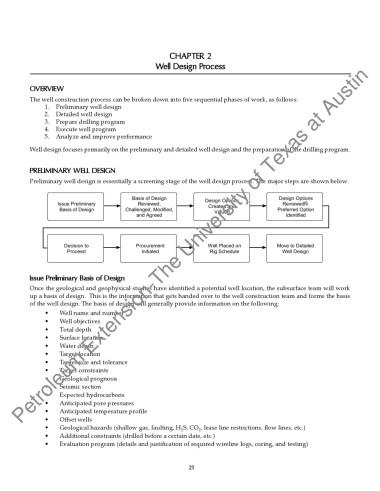
           Preliminary well design is essentially a screening stage of the well design process. The major steps are shown below.

                                            Basis of Design        Design Options          Design Options
                    Issue Preliminary        Reviewed,              Created and             ReviewedÑ
                    Basis of Design      Challenged, Modified,        Valued              Preferred Option
                                             and Agreed                                      Identified


                      Decision to            Procurement            Well Placed on        Move to Detailed
                       Proceed                 Initiated             Rig Schedule           Well Design


           Issue Preliminary Basis of Design
           Once the geological and geophysical studies have identified a potential well location, the subsurface team will work
           up a basis of design.  This is the information that gets handed over to the well construction team and forms the basis
           of the well design. The basis of design will generally provide information on the following:
               •    Well name and number
               •    Well objectives
               •    Total depth
               •    Surface location
               •    Water depth
               •    Target location
               •    Target size and tolerance
               •    Target constraints
               •    Geological prognosis
               •    Seismic section
               •    Expected hydrocarbons
               •    Anticipated pore pressures
               •    Anticipated temperature profile
               •    Offset wells
               •    Geological hazards (shallow gas, faulting, H S, CO , lease line restrictions, flow lines, etc.)
                                                           2
                                                                 2
               •    Additional constraints (drilled before a certain date, etc.)
               •    Evaluation program (details and justification of required wireline logs, coring, and testing)


                                                              2.1

